
How Formula Companies Mislead Parents
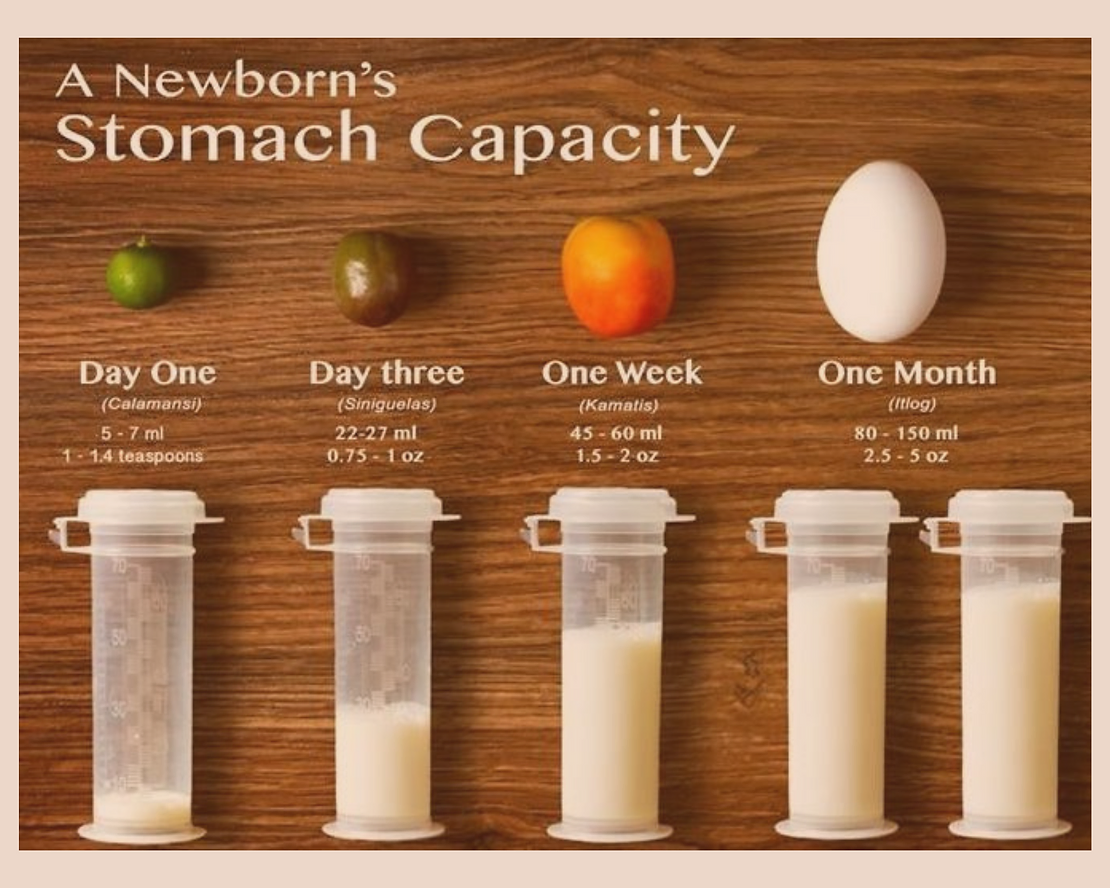
Some information on a baby’s stomach size found online or even given in hospitals, is represented by formula companies. –These companies encourage rapid increases in quantity of feeding. Volume is increased, because unlike breastmilk, formula is not a living substance and cannot change to meet the demands of a growing baby. Many formula companies mislead parents with images and measurements that do not accurately represent a newborn’s true tummy size. Here, we will provide you with the truth about newborn tummy size and the appropriate amount that is needed to feed your baby.
This picture shows a realistic depiction baby’s tummy size – and just how little a baby needs to be healthy and happy. Wow!
Am I Enough?
I remember being in the hospital room with with my newborn baby and feeling like he wasn’t get enough because he didn’t seem satisfied. He was crying and “seemed not to be getting enough milk”…because you know, crying equals hunger (eye roll). No one told me about small tummies and that colostrum was all they need in the first few days because their tummies are so small. All I was hearing from hospital staff, was that my milk hasn’t come in yet. Imagine: a new mother with zero experience and knowledge breastfeeding, hearing your milk hasn’t come in?? So then baby isn’t getting fed?? Talk about fear. Natural instinct is that baby needs to eat! In reality, the crying was him teaching me how to be a mother.
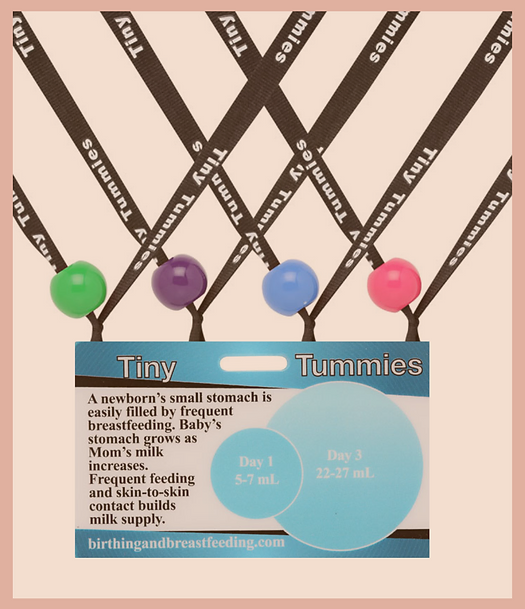
“See that tiny pink bead on the lanyard? That is the size of a newborn’s tiny tummy. When a baby is born, the mother produces colostrum which is the perfect superfood for baby.” – Kaci Dean of Heart and Bloom Birth and Lactation Services page posted on Facebook.
Colostrum or quite literally ‘liquid gold’, is all baby needs in the first few days! It passes antibodies designed to protect baby from illness while preparing his tummy for the mature milk to come in. Colostrum is a thick, syrupy liquid that is yellow/golden in color. This is ALL your newborn needs the first few days of life since their tummies are soo small. Your newborn will only take a small amount at every feeding. You will not produce a lot, but even one drop has SO many benefits for baby!
Stages of Milk Production and Secretion
1st Stage- Colostrum Phase – starts at the beginning of the third trimester of pregnancy. First milk baby will have.
2nd Stage- Transitional Milk Phase – occurs at 2-5 days post postpartum. This is when the colostral phase ends and transitional milk is produced. Blood flow within he breast increases and copious milk secretion begins.
3rd Stage- Mature Milk Phase – Marks the establishment and maintenance of mature milk production. It occurs 8-10 days postpartum.
NOTE: Frequent nursing increases milk production.
Tiny Tummies
The take away here, is how tiny a newborn’s tummy really is. I hope the visual aid of both photos brings reassurance that baby IS actually able to thrive and be nourished from YOU ALONE! Do not listen to when The amount of colostrum in your breasts at birth, is enough to meet baby’s needs, in those first days. The more skin to skin and having baby at the breast, the more milk you will make.
How Big Is Baby’s Stomach Really?
Day 1: About 1 teaspoon/feeding, the size of a small marble.
Day 2: 1-1.4 tsp./feeding
Day 3-6: (depending on when milk comes in) 3/4 – 1 oz. /feeding.
After 10 days: 1-1.5 oz /feeding.
1 month: 1-2 oz. /feeding
3-6 months: About 3 oz. /feeding
6 months: About 3-4 oz. /feeding
3-4 oz. maxing out for baby intake, as the amount of breastmilk needed doesn’t change, but the quality and nutriutial factors of the milk changes to meet the baby’s needs. Therefore, never needing to go more than 3-4 oz, even though baby is growing.
(See newborn frequency of eating.)
At birth, a newborn’s stomach is incredibly small and can only hold a small amount of milk. It is about the size of a cherry or marble, holding merely 5 to 7 milliliters of milk, roughly equivalent to a teaspoon. This tiny size is because the digestive system of a newborn is still developing, and their intake needs to be regulated accordingly.
It’s Easy To Overfeed At The Bottle.
Bottle-fed babies tend to overeat due to the ease of the bottle and natural drip of the nipple. If you are nursing on demand this will not matter. For babies that must be bottle or tube fed (such as NICU babies) it is imperative that they are not overfed, especially if the goal is to get to the breast.
RULE of thumb: Babies will NOT overeat at the breast, however due to the ease of flow of bottles, they can overeat on a bottle. (See Paced Bottle Feeding).
Be Prepared for Growth Spurts.
Babies go through growth spurts, during which they may seem hungrier and demand more frequent feedings. Be prepared for these periods and respond to their increased hunger cues accordingly. It doesn’t mean they need larger servings; it just means they might need more frequent feedings.
Formula companies have a commercial stake in promoting their product and therefore tend to present information that may not necessarily align with a newborn’s actual requirements.
As a new parent, it is easy to be bombarded with advertisements and marketing campaigns from various formula companies claiming that their brand is the best for your little one. They often emphasize features like added nutrients, improved brain development, and enhanced digestion. However, what many parents fail to realize is that these claims are often exaggerated, and the suggested serving sizes may not accurately reflect the capacity of a newborn’s tummy. Understanding a newborn’s tummy size is crucial in providing appropriate nutrition and not stretching those tiny tummies so that you won’t fall trapped in a never ending cycle of not being able to keep up. While formula companies often misrepresent serving sizes, it is essential for parents to trust their instincts, listen to their baby’s cues, and consult with their pediatrician for accurate guidance.