

Bottles are usually the method of choice when the mother is separated from her baby during feedings. There are instances when the mother may be temporarily away and unable to breastfeed—such as when she returns to work or school, in the case of an emergency, or simply for a short date night—leaving a caregiver to care for and feed the baby. In such situations, adopting paced bottle-feeding can help maintain breastfeeding habits and ensure the baby is not overfed.
Bottle-fed babies can and will overeat due to the ease of the bottle and the natural drip of the nipple. If you are exclusively nursing on demand, this may not be a concern. However, for babies whose mothers are away or those who must be bottle- or tube-fed (such as NICU babies), it is imperative that they are not overfed, as this can stretch their tiny tummies—especially if the goal is to transition to the breast or continue your breastfeeding journey.
RULE of Thumb: Babies will NOT overeat at the breast, however due to the ease of flow of bottles, they can overeat on a bottle.
For breastfeeding mothers who occasionally turn to the use of bottles when they are separated from baby, paced bottle feeding can help in maintaining a steady milk supply. When the baby is not overfed with a bottle, they are less likely to wean from breastfeeding prematurely. Mothers can also continue to breastfeed on-demand without worrying about nipple confusion.
Rule of thumb: Feed the baby, not the freezer.
It is more important to establish a strong milk supply and create a successful breastfeeding relationship between you and baby, then it is to have milk for just in case or for someone else to feed baby with a bottle. This can only be established with frequent and unrestricted direct breastfeeding.
What Exactly Is Paced Bottle Feeding?
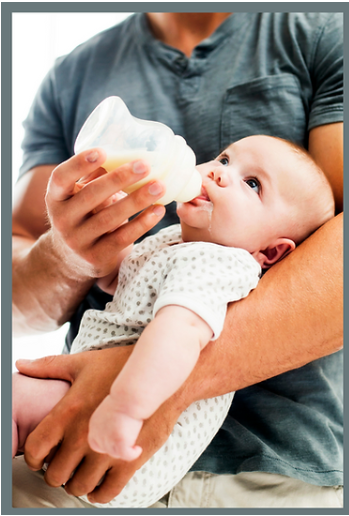
Paced Bottle Feeding is feeding technique that promotes a healthier and more natural approach to bottle feeding for infants. It is the best way to to mimic breastfeeding and ensure baby controls how much they eat. This holds true for whether the bottle contains breastmilk or formula. The goal of paced feeding is for the baby to suck, swallow, breathe in a rhythm similar to that of breastfeeding.
One of the main advantages of paced bottle feeding is that it closely mimics the mechanism and experience of breastfeeding. This technique discourages overfeeding, promotes a slower-paced mealtime, and allows the newborn to properly recognize and respond to their feelings of fullness.
Paced bottle feeding is essentially pacing the feeding so that the baby does not overeat on the bottle and avoid stretching out baby’s small tummy (see tummy size).
Due to the ease and faster flow of the bottle (even the slowest nipple), it’s very easy for baby to consume more than they should in a feeding before their tummy has a chance to signal their brain they are full. Paced bottle feeding slows baby down so they have a chance to realize the feeling of being full and eat only what they need.
Note: A baby who gulps down a full bottle quickly is doing so in an attempt to breathe. Pacing slows bottle-feeding to better mimic feeding at the breast and helps the baby coordinate sucking with breathing.
Benefits of Paced Bottle Feeding vs. Traditional Bottle Feeding
Paced bottle feeding has several benefits for both parents and babies. It allows the baby to develop better self-regulation skills and become more in tune with their own hunger and fullness cues. It also helps prevent excessive air intake and overfeeding, minimizing gas and fussiness, and nurturing a positive breastfeeding relationship for mothers who also breastfeed.
“This approach differs from traditional bottle feeding, which often involves feeding the baby in a reclined position, with a fully filled bottle that allows the milk or formula to flow freely. Feeding the traditional way greatly increases the risk of expanding and stretching the newborns tiny tummy because it leads to a rapid intake of milk, causing the baby to overfeed and experience discomfort or digestive issues. Paced bottle feeding, on the other hand, allows the baby to have more control over the feeding process and helps them regulate their own hunger. – Linda Corbant, IBCLC
How To Pace Feed:
- Make sure the nipple of the bottle is the SLOWEST FLOW nipple, regardless of baby’s age.
- Hold baby in a more upright position than you would while breastfeeding. Meaning…not in a cradle hold!
- Allow infant to pull the nipple to his/her mouth—do not force the bottle in the baby’s mouth. Tip: You can move the bottle along the baby’s lips, tickling their lip in a way the mother would with her nipple. This Encourages them to open wide, the way they would when latching to the breast.
- Make sure bottle is held horizontally not vertically. This is key! This will help slow the flow. Baby has to work HARD at the breast to get milk out, so by holding it horizontally it mimics this. When the nipple is tipped down to allow milk to flow freely, baby doesn’t have to work hard. Don’t worry about air intake, as burping will remedy this. Swallowing fluids too rapidly is a greater concern than swallowing air. This method allows the baby to breathe between swallows. Note: If baby is tied they will be taking in more air then you want!
- Allow baby to suck for 3-4 sucks and then take the bottle out of the infant’s mouth, or rest it on the infant’s upper lip. Pause for several seconds, and observe what the baby does. Most babies swallow, then breathe, and then open their mouths and root for the nipple. Slowly offer on lips again and allow baby to draw the bottle back into their mouth. Repeat.
- Look for cues that baby is full. Some cues are: slower sucking, not drawing the nipple back in, falling asleep, eyes wandering, hands open and relaxed.
- Baby does NOT have to finish the bottle. Stop feeding when baby starts showing signs of fullness.
RULE of thumb: It should take at least 20 minutes for a feeding. Overfeeding will stretch baby’s tummy and make it extremely difficult for the mother to keep up with the increased demand.
Click here for video on how to pace feed
Bottle Portions
Make sure bottles are portioned appropriately, according to baby’s stomach size. (See How Big A Baby’s Stomach Really is)
RULE of thumb: 1 oz. of milk supply Per hour mother is away, split into portions based on how often they are wanting to feed, or how often they typically nurse. The younger the baby, expect smaller portions more often.
RULE of thumb: Quantity of milk in bottle does not change. As the infant gets older, they do NOT need bigger portions. They do not need larger portions as they get older as breastmilk changes to meet the baby’s needs. It is a living substance that is constantly changing and tailored just for baby and their age.
EXAMPLE by The Cleavage Club:
The average 2 month old typically takes in about 2 oz. Every 2 hours. The average 4 month old might consume 3 oz. Every 3 hours. Almost all breastfed babies max out around 5-6 months with 3-4 oz. Portions.
When To Use Paced Feeding
-
Anytime the mother will be away during a feeding or if breastfeeding is not available.
-
If the baby is solely bottled fed.
-
If mother and baby are having trouble with latching and baby is frustrated and crying, paced feeding can be used as a tool to calm the baby and help make feedings a pleasant learning experience.
When paced feeding is used, parents often observe their frantic, worry baby become calm, their hands relaxing, eyes opening, and brows smothering. The baby learns that feeding does not have to be an aversive experience. A few minutes of slow-paced feeding can raise the trust feel of a baby who is unenthusiastic about breastfeeding. It can be used to calm the baby enough to put to the breast. – Judith Lauwers, Counseling the Nursing Mother