

You have probably seen that picture on online of breastfeeding mothers with the a freezer full of breastmilk. Or that mother who is proud of being a ‘milk machine’ and able to donate a plethora of milk. Unfortunately, pics like this are unrealistic and frequently discourage mothers, while setting too high of expectations. Believe it or not, these pictures usually can tell us, there is an oversupply and mama is most likely missing out on a full breastfeeding relationship with baby. Think about it. Have you considered how much time a mother would have to pump and be away from directly nursing baby to get a “stash” like that? It’s a lot of time and work.
At, Tree of Life Organics and Lactation, we go by the rule of thumb, “feed the baby, not the freezer.” This concept emphasizes the importance of breastfeeding in the immediate postpartum period and holding off on pumping. The term “feed the baby, not the freezer” is to encourage new mothers to focus on direct breastfeeding rather than relying solely on pumping and bottle feeding.
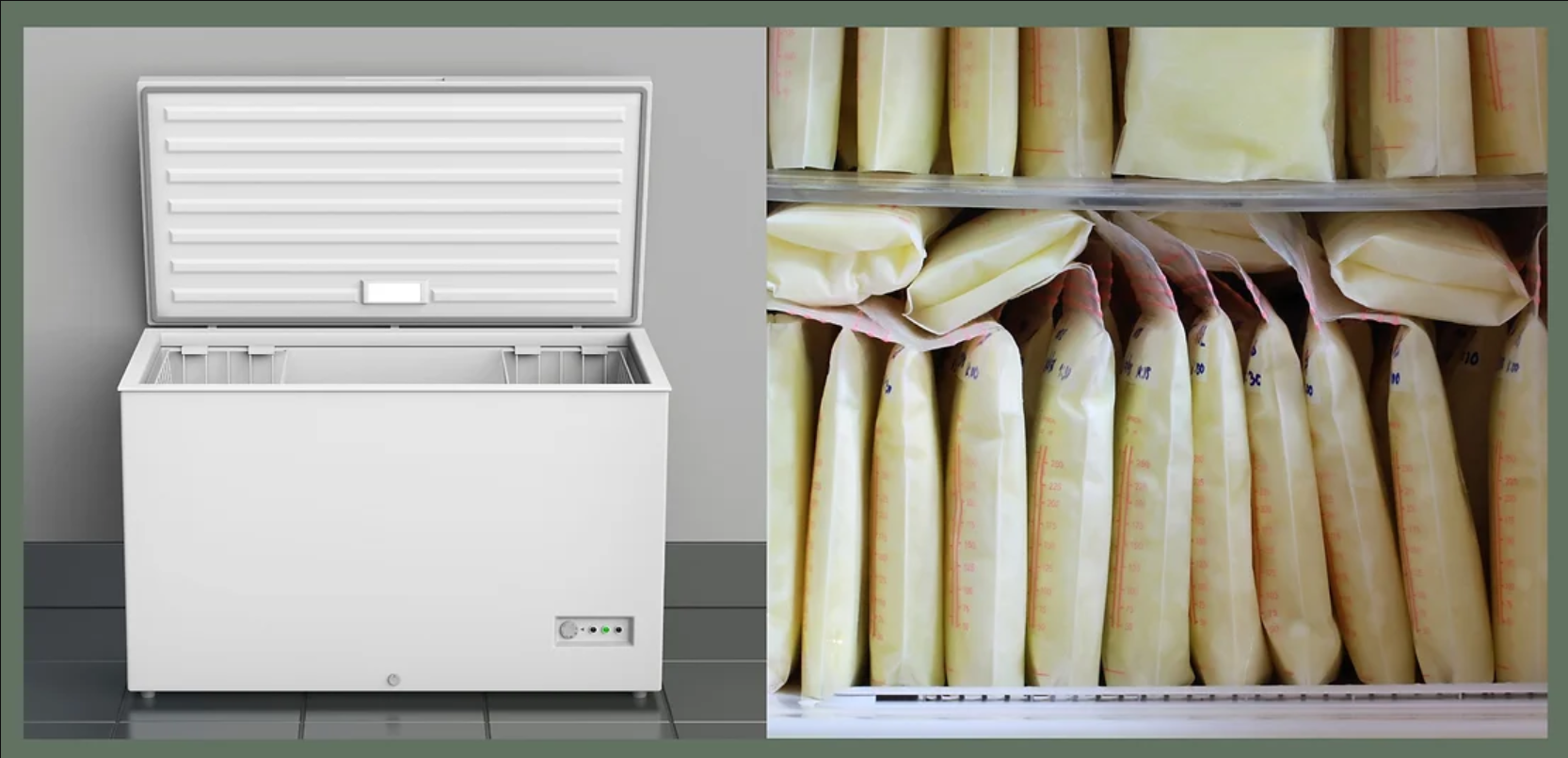
Rule of thumb: Feed the baby, not the freezer.
It is more important to establish a strong milk supply and create a successful breastfeeding relationship between you and baby, then it is to have milk for just in case or for someone else to feed baby with a bottle. This can only be established with frequent and unrestricted direct breastfeeding.
IMPORTANT: Your pump out-put is not an indictor of how much milk baby gets when nursing. Baby is way more efficient then the pump.
Benefits of Directly Breastfeeding
-
Helps to initiate and maintain a healthy milk supply. In the first few days after birth, a mother’s body produces colostrum, a thick and nutrient-rich milk that provides essential antibodies to protect the baby from infections. Colostrum production is directly linked to the baby’s suckling at the breast, and the more the baby nurses, the more milk the mother’s body produces. This “demand and supply” mechanism is crucial for establishing a healthy milk supply and can be disrupted by relying too heavily on pumping and bottle feeding.
-
Allows for better milk transfer. Babies are highly efficient at extracting milk from the breast, and their suckling stimulates milk production, leading to an appropriate growth rate and weight gain. On the other hand, bottle feeding requires a different sucking technique, which may result in overfeeding or uneven milk intake. By feeding the baby directly at the breast, the mother can ensure that her baby gets the appropriate amount of milk and avoids any potential feeding issues.
-
Enables mothers to respond more effectively to the baby’s cues and needs. Infants have different hunger patterns and may need to nurse more frequently during growth spurts or during periods of illness. By exclusively feeding the baby from the breast, the mother is better able to meet these changing needs, offering comfort, nourishment, and emotional support when required.
-
Breastfeeding is not just about providing nutrition. It is a unique and intimate experience that strengthens the bond between the mother and the baby. The physical closeness and skin-to-skin contact during breastfeeding release hormones that promote feelings of love and attachment. This emotional connection is essential for the baby’s overall development and well-being.
The Do’s and Dont’s
Do:
-
Use a Milk Saver or Haakaa to collect leaked milk from the side you are not nursing on and freeze that for emergencies.
Don’t:
-
Do not obsess about getting a big freezer stash of milk for “just in case”. Mama and baby should be together most of the time in these early weeks and breastfeeding on demand. There is no need for a giant milk stash. This only adds stress and most moms end up donating or wasting milk they saved and never used.
Note: Large stashes are indicators of an oversupply…This comes with a lot of cons and often pain as well.
So don’t stress out mama and give that baby milk straight from the tap!
While pumping and bottle feeding have their place, it is important to prioritize direct breastfeeding in the immediate postpartum period to maximize the benefits for both mother and baby.
Unless the mother returns to work or needs to be away from the baby for an extended period, it should not replace direct breastfeeding in the early stages. By prioritizing direct breastfeeding over pumping, mothers can establish a strong milk supply, ensure proper milk transfer, respond to the baby’s needs effectively, and strengthen the emotional bond with their little one.
Note: If you will be pumping at work, you will make exactly what baby needs for the next day, as long as pace bottle feeding instructions are being followed. See paced bottle feeding.